Engineered hardwood flooring is a strong, long-lasting, and cost-effective flooring option. Unlike solid hardwood flooring, engineered hardwood flooring made with Baltic birch plywood made from multiple layers of cross-laminated veneers for enhanced strength and moisture resistance. Whether you want to implement more engineered hardwood in your building projects or install new flooring in your home, this high-end option can significantly enhance your spaces.
Engineered hardwood is a stable, real-wood flooring that is more resistant to moisture-related contraction and expansion than solid hardwood. Many first-time builders or homeowners mistake engineered hardwood as synthetic, but it is made from real lumber. Its layers and construction differentiate it from solid hardwood floors.
Manufacturers glue a top layer or veneer of real wood to the Baltic birch plywood core to create engineered hardwood flooring. Rather than a solid piece of wood, engineered hardwood flooring features a veneer top layer with underlying layers of plywood or alternative wood products.
Engineered hardwood flooring is a fantastic option because of these advantages:
Engineered hardwood is more stable than solid hardwood, making it a highly durable option. It tends to last longer than alternative flooring options and is easier to maintain.
The stability of engineered hardwood enables manufacturers to create wider, longer planks. This design can help you achieve a more visually appealing look with fewer joints breaking up the room. Many people appreciate larger planks for their sleek, modern appearance.
You can find engineered hardwood in a wide range of wood species, plank sizes, and sheens. Multiple variations make it easy to craft your desired aesthetic, no matter what style you or your client choose.
A prefinished engineered floor can save you a few weeks of production time versus a site-finished floor. If you’re a homeowner, this efficiency can help you move into your house sooner. If you’re a builder, it can help lower your carrying costs and finish high-end houses faster for your clients.
The cost of engineered hardwood is typically lower than that of solid hardwood because of these factors:
Engineered hardwood is fully customizable, letting you choose the following elements:
Engineered hardwood comes in various colors, such as brown, red, gray, white and black, suiting a variety of design preferences.
Once you choose a color, your wood manufacturer can help you select the perfect sheen from these options:
Engineered hardwood is a versatile option for a wide range of applications. You can install it in residential and commercial spaces, making it the perfect option for many projects. Consider how you can enhance the following rooms and spaces with engineered hardwood:
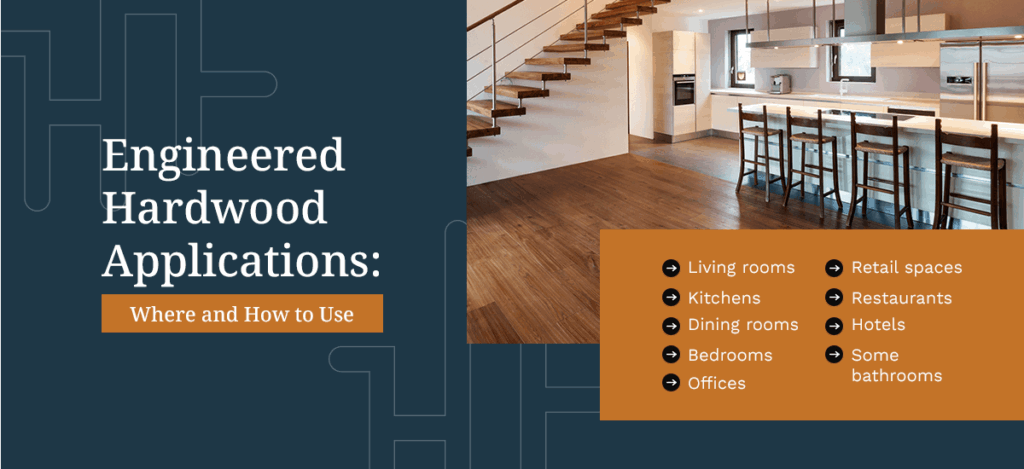
Engineered hardwood’s durability and heightened moisture resistance enable it to withstand high-traffic areas and semi-humid environments. However, it’s important to consider how you or a client will utilize a space and how much moisture it may produce.
The floating installation method connects engineered hardwood planks to each other without connecting them directly to the subfloor. They essentially “float” above the subfloor with an underlayment. This method is ideal if you want a fast, DIY-friendly installation.
With a glue-down installation, the installer adheres engineered hardwood directly to the subfloor using a urethane-based or acrylic adhesive. This installation method is ideal when you need to install flooring over concrete slabs or want to achieve a solid, stable feel underfoot.
The traditional, nail-down installation method involves nailing engineered hardwood directly into the subfloor. This is ideal for spaces with a wooden subfloor, and it offers the most secure, long-lasting installation.
The lifespan of engineered hardwood is typically 20 to 30 years, but it can last even longer when you purchase and maintain high-end wood from a reputable company.
The following factors can impact your engineered hardwood floor’s longevity:
Similar to solid hardwood, you can refinish engineered hardwood multiple times. When you choose flooring with a thick top layer, such as a 4- to 6-millimeter wear layer, you can sand the worn finish and apply a new coating to extend your floor’s lifespan.
Engineered hardwood flooring offers enhanced strength, durability, beauty and longevity. Layer 12 Hardwoods offers high-end engineered hardwood made from Baltic birch plywood and exterior-grade glue to provide you with excellent stability. We can customize size, colors and sheens to match your home or project’s precise style. Contact us to learn more about our engineered hardwood flooring and customization options.